Improving For Over 40 Years
From the company’s beginnings in a dairy barn over 40 years ago, attention to detail and excellence were part of how things were done. When you’re solving people’s problems with stray voltage and cathodic protection, quality must be done—it cannot simply be a slogan on the wall.
 |
 |
|
Dairyland’s original manufacturing facility |
The converted manufacturing space |
As the company grew and began to manage quality through the eyes of trusted third parties, such as UL and IECEx, and later ISO 9001, “the way it has always been done” started to get more complicated.
Regulations require documentation and structure, which can be hard on a small, family-minded company. Navigating the changes wasn’t always easy but, “We trusted Henry (Tachick) and the others to make good decisions because they had proven themselves; if they said we needed to do something new, we trusted them”, says Sherry Ann Kostreva, who started with Dairyland in 1995, “And if things changed and then had to change again, it was ok; we didn’t rest in things because they were new, we rested in what was good.”
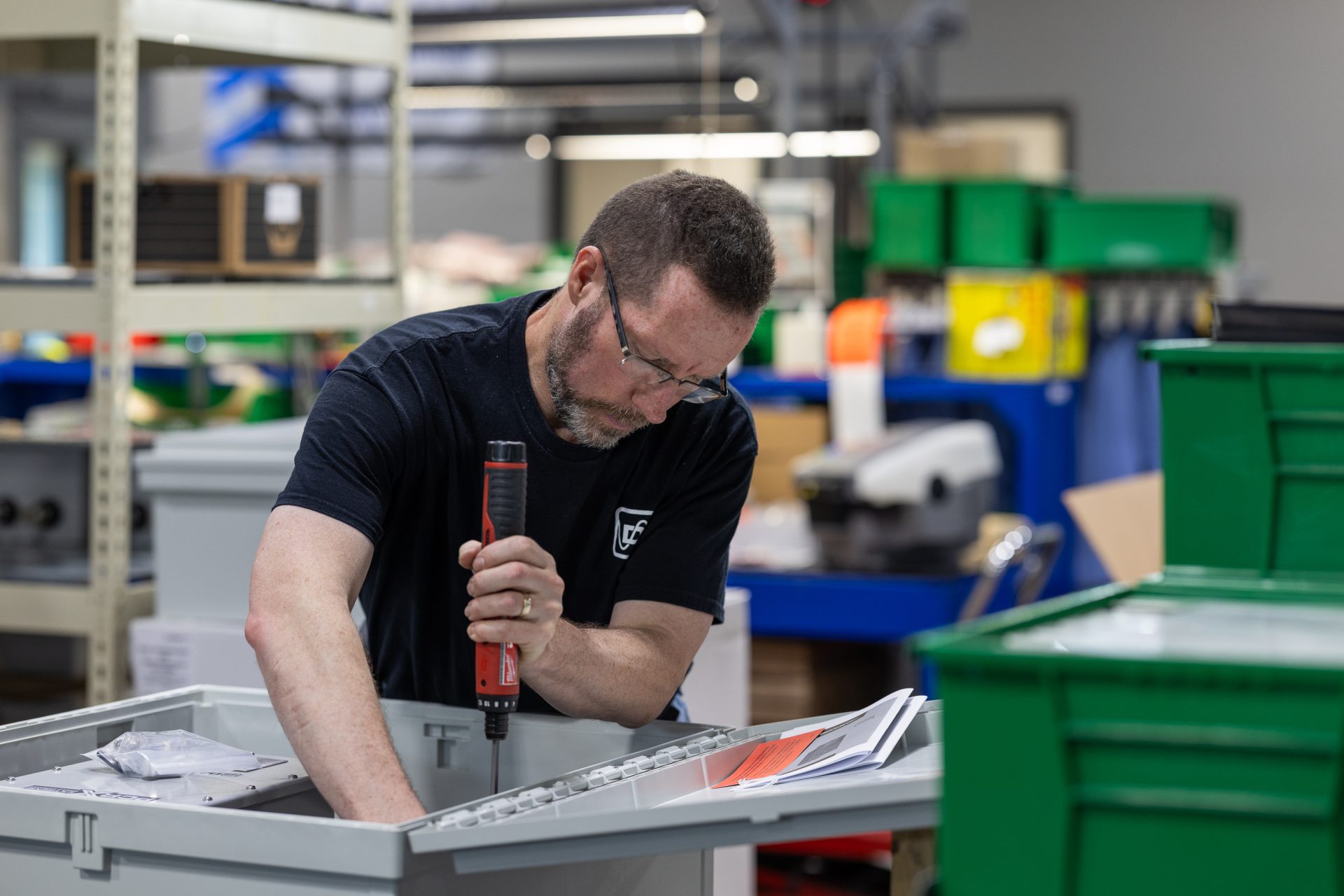
Change took on a new meaning when our new manufacturing facility—The Shop—opened in 2016, after thirty-three years of operating in a converted milking barn. Under guidance from the subject matter experts at Wisconsin Manufacturers’ Extension Program (WMEP), the phrase “continuous improvement” entered the company’s lexicon. The company began shifting its production model away from decades of batch production toward single-piece flow, designing work cells, and training the manufacturing team in a whole new way of doing things—and in a whole new environment.
 |
 |
|
Outside The Shop |
Inside The Shop |
The Lean Years
Shortly after 2020, the idea of a “Lean Team” was born, thanks to the on-going relationship with WMEP.
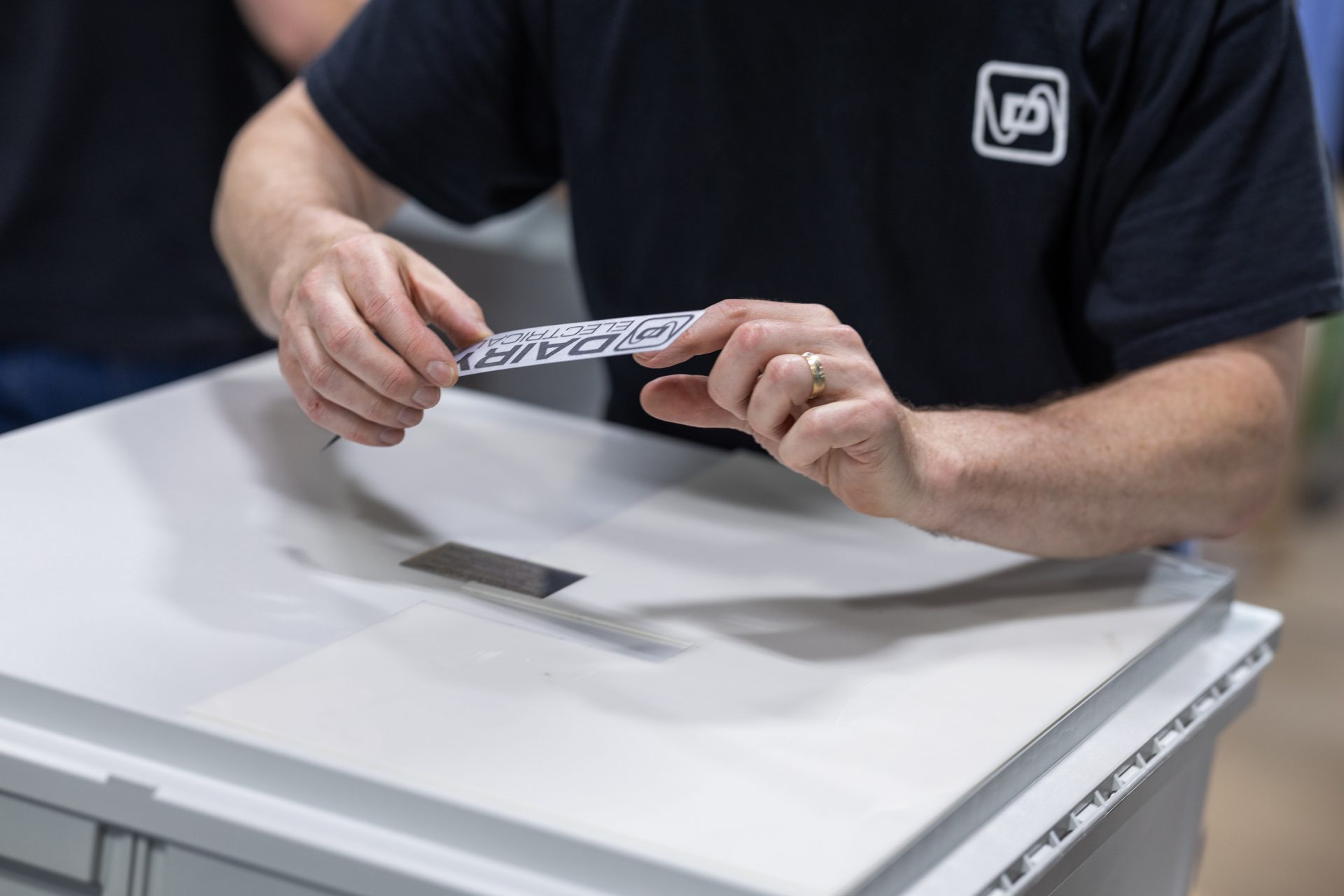
Lean improves value by removing anything that doesn’t transform a raw good into a finished product (“waste”). Wastes include defects, inventory, motion, transportation, over-production, over-processing, and waiting. For example, laser-cut plastic templates replaced t-squares for applying decals to the front of an enclosure, reducing defects, motion, and over-processing. Cleaning up computer files helps to find what is needed faster, with fewer mouse clicks or waiting for a search to finish.
 |
|
Utilizing a laser-cut template for nameplate application |
Identifying a waste is one thing; dealing with it is another. The Lean Team, per its charter, “acts as a conduit to achieving our company strategies by building the framework, setting the direction, and fostering a culture of continual improvement at Dairyland.” As such, one of the first priorities of the team was to develop a system to get feedback from the people doing the work across the organization.
The Lean Team developed an electronic form for employees to submit improvement needs and solutions; QR codes were placed within The Shop’s work cells to make it easy for the Assembly and Supply Chain teams to share their ideas while they worked—a quick link to the form was also placed on the company’s Sharepoint home page for the people who are more desk-based. To date, more than 155 submissions have been made; improvements include a shelf to get heavy parts up off the floor, software process changes, bathroom door handles that indicate occupied status, and working with vendors to modify their packaging to reduce handling demands on the production team.
During the company’s quarterly meetings, The Lean Team showcases a submitted improvement or a problem-solving/improvement topic; recently, Joe Mutchler, Manufacturing and Quality Manager, presented on Eli Goldratt’s Theory of Constraints.
In 2024, The Shop deployed iPads with assembly instructions to ensure consistency and quality; getting a new Assembler up to speed became easier and quicker since they could review the standard work, rather than try to remember what they had seen or done the week before. “It’s easy to use and you don’t feel out of place when you go and grab one, because we all use it as a reference, even the people who have been here for years”, says Leo Meeks, an assembler who started in November of 2025.
When a submission involves one of Dairyland’s products, the request is handed over to the Engineering Change Order/Change Request (CRCO) process; assembly instructions, packaging, customer-facing documents, and the like need to be evaluated to ensure product functionality and quality aren’t changed. Changes to products that are Ex-rated for Class 1, Division/Zone 1 and 2 hazardous locations are also reviewed by Dairyland’s Ex Authorized Person to ensure compliance with regulatory standards.
Valuing the Person
At Dairyland, we believe everyone contributes to the success of the company and its vision to live engaged and make a safer world. New employee on-boarding is intentional and connects them with leaders across the company to help the new hire understand that we have a constancy of purpose, regardless of our job title or department.
In 2026, we began a series of company-wide training sessions to develop problem-solving and innovation skills. We are normalizing asking “Why?” and challenging assumptions to uncover root causes of issues and non-value-added steps in our processes, while learning to see systems and interconnected processes.
Though the company has outgrown its humble beginnings, the creativity and willingness to help others remains central to what we do. Whether it’s submitting an improvement suggestion or helping a co-worker figure out why something happened, Dairyland’s strength is in its ability to innovate with purpose and excellence. You could say it helps us to be Rugged and Reliable for you!